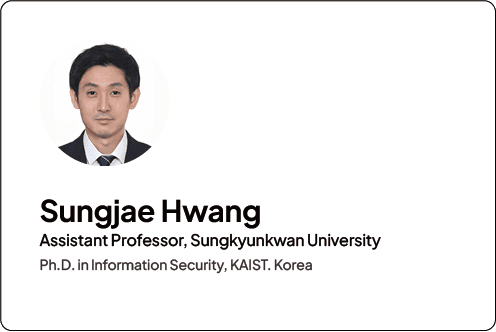
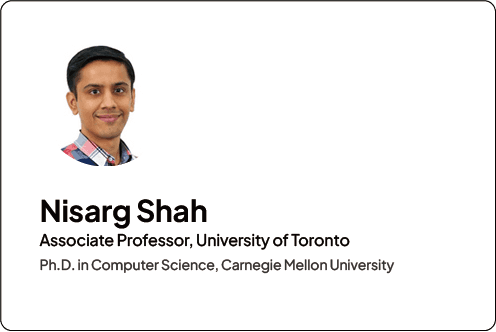
A Thought Leader Who can be honored through the world with the core skills
PLACING STUDENTS AT THE CENTER OF THE LEARNING EXPERIENCE
Having autonomy in choosing the learning paths, setting goals, and engaging in collaborative projects.
Involving hands-on activities, real-world applications, and opportunities for students to make connections between theory and practice.
Enhancing retention, critical thinking, the development of practical skills.
PROVIDING EXPERIENTIAL LEARNING
Focusing on hands-on, practical learning experiences and actively engaging in real-world projects, internships, research, and community service.
Developing valuable skills, gaining industry exposure, and enhancing their problem-solving abilities through the application of theoretical knowledge to practical situations.
OFFERING INQUIRY-BASED LEARNING
Promoting active learning through questioning, investigation, and discovery.
Encouraging to ask questions, exploring topics of interest, and seek answers through research and experimentation.
Fostering critical thinking, problem-solving skills, and a deeper nderstanding of concepts.
ENHANCING INTERDISCIPLINARY LEARNING
Emphasizing the importance of integrating knowledge and skills from multiple disciplines in the learning process.
Encouraging students to approach problems and challenges from a variety of perspectives.
Emphasizing the importance of peer-to-peer interaction and collaboration in the learning process.
We aspire to educate our students to become globalized citizens for the 4th industrial revolution. The program thus focuses on encouraging cross-cultural understanding, social justice, and environmental (responsibility) sustainability. Our students learn from and interact with prestigious internationally trained professors and have access to skilled, supportive administrators within a cost-effective education process.
We place our students at the center of the learning experience. IDegree Program emphasizes personalized learning, active student engagement, and self-directed learning. Students have autonomy in choosing their learning paths, setting goals, and engaging in collaborative projects. Our courses It involves hands-on activities, real-world applications, and opportunities for students to make connections between theory and practice. This approach enhances retention, critical thinking, and the development of practical skills.
By providing experiential learning focusing on hands-on, practical learning experiences, we encourages students to actively engage in real-world projects, internships, research, and community service. Through the application of theoretical knowledge to practical situations, students develop valuable skills, gain industry exposure, and enhance their problem-solving abilities.
We offer Inquiry-based learning to promote active learning through questioning, investigation, and discovery. Students are encouraged to ask questions, explore topics of interest, and seek answers through research and experimentation. It fosters critical thinking, problem-solving skills, and a deeper understanding of concepts.
Interdisciplinary learning emphasizes the importance of integrating knowledge and skills from multiple disciplines in the learning process, and encourages students to approach problems and challenges from a variety of perspectives. This philosophy emphasizes the importance of peer-to-peer interaction and collaboration in the learning process, and encourages students to work together on projects and assignments
We aspire to achieve our educational goal: "A Thought Leader who can be honored through the world with the following 5 core skills: Ethics, Teamwork Capabilities, Quantitative Reasoning, Multidisciplinary Methods, and STEM & software.”
Courses
EBS Collaboration: The courses created in collaboration with Korea Educational Broadcasting System (EBS)
Computer Programming with Python
David Blaikie
This course deals with applications of Python programming language to business problems. Topics include how to get started with Python, numbers and strings, loops, functions, lists, data files, summarizing and visualizing data, and big data applications. This course aims to introduce students to the techniques, tools and thought processes that computer scientists apply to solve problems. The course will particularly highlight the role of computation in solving real-world problems. This includes problem analysis, algorithm design, program implementation, and testing. The implementation language of this course will be Python3.
Computer Programming with Python
David Blaikie
This course deals with applications of Python programming language to business problems. Topics include how to get started with Python, numbers and strings, loops, functions, lists, data files, summarizing and visualizing data, and big data applications. This course aims to introduce students to the techniques, tools and thought processes that computer scientists apply to solve problems. The course will particularly highlight the role of computation in solving real-world problems. This includes problem analysis, algorithm design, program implementation, and testing. The implementation language of this course will be Python3.
Writing and Reasoning
Joshua Park
The purpose of this course is to learn to become a better reasoner. Reasoning concerns several cognitive activities: thinking, inferring, making decisions, evaluating evidence, and more. Although in general we reason well, we often do poorly at these activities, particularly when under pressure, emotional, or biased about a topic. In many cases, this is because we are not sufficiently critical of our own reasoning; in other cases, this is because we are not aware of common “pitfalls” of reasoning that we easily fall into. There are two primary objectives of the course, a theoretical one and a practical one. The first objective is to gain some knowledge of the subject matter of critical reasoning, including argumentation, logic, decision theory, and more. We will draw on a variety of sources in science and humanities. The second objective is to improve your practical ability to reason in concrete situations, by analyzing arguments and exploring several case studies.
Environmental Ethics
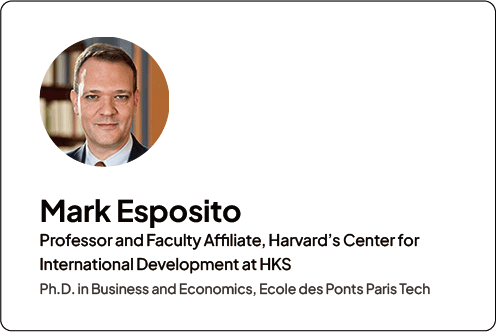
Mark Esposito
Understand the importance of impact on the environment to future value, analyze the characteristics and cases of various social enterprises based on corporate responsibility for the environment, and understand the basic Technology related to the environment. This upper-level course examines environmental issues in developing countries, such as air pollution, management of the commons, climate change, energy use, and public health. This course connects the foundation of microeconomics with real-life household and firms’ decision-making on environmental issues. Students will be exposed to basic empirical techniques and the latest examples that identify and/or evaluate key environmental problems in development. The main goals of this course are to discuss the possible economic causes and consequences of environmental issues and to be cognizant of the various government and market-based solutions to environmental issues in development.
Statistics with SW Tools
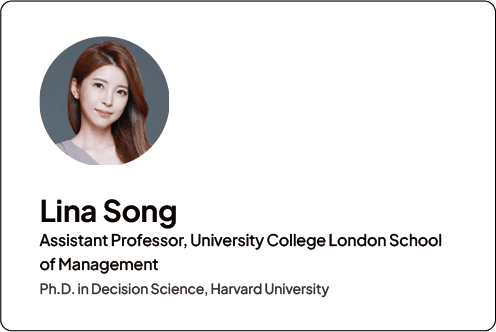
Lina Song
We study the basics of statistics, which are key in AI and data-based SW society, and operate statistics based on actual problems through various SW Tools including statistical functions of Excel. This class is for students who would like to improve their education using digital tools. This class explores a wide range of tools for rich media content creation and improving workflow. This class will focus on the core skills every student will need to move fluidly through their career. At the end of this semester, each student will have the ability to not only begin working with these tools and learn more but be able to ask the right questions in the future so that they may increase their own skills.
Positive Balance and Mental Health
Richard Lakeman
Since a healthy balance management and operational strategy for work-life balance is necessary, learn about whether individuals manage stress and maintain positive mindset. Here are some helpful ways to keep your peace of mind and have a healthy work-life balance. This class will provide an overview of the field and introduce students to relevant concepts and ideas. Selected health behaviors will be addressed from a bio-psychosocial point of view. Throughout the course students will gain an understanding of underlying mechanisms, preventative approaches and treatment of common mental-diseases and problematic health behaviors. The major goals of this course is to examine (1) the relationship between physical and mental/emotional health and (2) bio-psychosocial processes affecting health and illness. To this end, We will discuss the ways in which behavior can influence health and individual well-being and the effects of psychosocial factors on health (e.g., stress, depression), physical health (e.g., heart disease, chronic illness, pain), and health-related behaviors (e.g., treatment adherence, tobacco and alcohol use).
Microeconomics
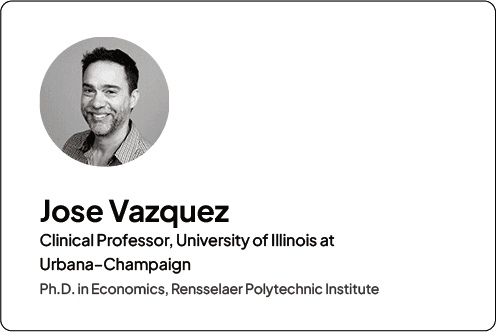
Jose Vazquez
This course is designed to help the students build an understanding of the economics of the market-place. In particular, the course focuses on microeconomic principles that demonstrate the role and limitations of both competitive and imperfectly competitive markets in motivating socially efficient consumer, business, and public sector choices. This is an introductory course in microeconomics. Microeconomics considers each individual as economic agents such as consumers and firms as they interact in the market to seek their best interests: it deals with the process and the outcome of each agent's behavior in the market. This course covers consumer theory, firm theory, theory of industrial organization, theory of markets for factors of production, theory of inequality of income/wealth, and so forth. In this course we will study not only economic theory in abstract form but also how the workings (or failings) of real economy can be explained by economics. Alongside diagrams and equations, stories will be used in understanding economics and the economy.
User Experience Design and Development
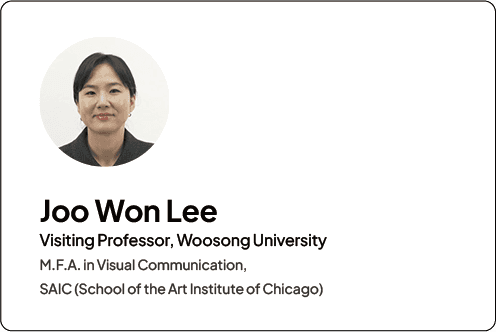
Joo Won Lee
Introduction to the fundamental components of UX design, based on Design Thinking. This is a project-based course where students learn the basic principles and methods, composed of user research, concept generation, human-centered visual design principles, and low-fidelity prototyping. This course encourages students to experiment with emerging online tools such as Lucid, Notion, Figma, and Wix.
Principles of Marketing
Jae Young Lee
This course provides from the management point of view, marketing as a system for the satisfaction of human wants and a catalyst of business activity. It examines different perspectives from producer to consumer and emphasizes the planning required for the efficient use of marketing tools in the development and expansion of markets. It concentrates on the principles, functions, and tools of marketing, including quantitative methods.
Communication by Digital Tools
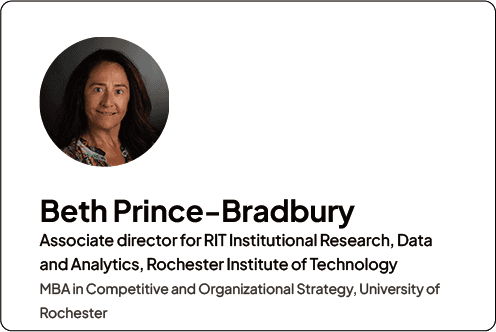
Beth Bradbury
Experience Excel and PPT-related technologies that are most commonly used in working levels, tools for actual analysis, presentation, and communication; and learn how to use them for presentation or discussion.
Introduction to Database
Alan Paradise
The database is a collection of information that is integrated and managed for the purpose of being shared and used by multiple people. This course will provide an introductory look at database concepts, emphasizing the relational database model. Subject covered are the following: data models, query languages, transactions, parallel data processing, and database as a service.
Faculty
The Faculty: Serving synchronous & asynchronous